
Most advice on this subject reads like a timetable. Monday, reminiscence. Tuesday, music. It rarely survives contact with a real Tuesday afternoon, when your mum has no interest in the memory box you spent an hour putting together and would rather fold the same tea towel four times.
This guide covers activities for dementia patients at home that tend to work in practice, why the familiar usually beats the novel, and how to adapt things as the condition changes rather than giving them up.

Key takeaways
- The aim is not to keep someone occupied. It is to give them something that still feels like their own life.
- Familiar activities almost always work better than new ones, because they carry no risk of getting it wrong.
- Adapt rather than abandon. A recipe with three steps instead of ten keeps cooking in the week.
- Calming activities for dementia patients matter most in the late afternoon and early evening, when agitation often peaks.
- Simple games for dementia patients work when nobody can lose. Drop the scoring and most of the rules.
- What worked last month may not work this month. That is the condition changing, not you getting it wrong.
Start with what it is for, not what it is
The most useful question is not what activity to try, but what you are trying to achieve in the next hour. Settling someone who is agitated needs something different from filling a long afternoon.
| What you need | What tends to work |
|---|---|
| To settle and calm | Music they know well, folding laundry, hand massage, looking out at the garden |
| To occupy the hands | Sorting buttons or coins, peeling vegetables, winding wool, simple woodwork |
| To spark memory and talk | Old photographs, familiar songs, objects from their working life |
| To move a bit | A short walk on a familiar route, seated exercises, dancing in the kitchen |
| To feel useful | Laying the table, watering plants, sweeping, sorting the washing |
Alzheimer’s Society makes the same point in its guidance on activity ideas, which stresses finding something that has genuine meaning for the person rather than something that simply passes the time.
Calming activities for dementia patients
Late afternoon and early evening are often the hardest part of the day. Restlessness, repeated questions and wanting to leave the house are common at that hour, and pushing a stimulating activity into it usually makes things worse. These tend to help.
- Music from their teens and twenties. The most reliable single tool there is. Music from roughly ages 15 to 25 stays accessible longest, and often reaches someone when conversation cannot.
- Repetitive tasks with no end point. Folding, sorting, polishing, winding. The repetition is the point, and there is no moment where it is finished and they have to stop.
- Touch. Hand cream and a slow hand massage, brushing hair, a warm flannel. Calming in a way that needs no words and no memory.
- Something to watch rather than do. A bird feeder at the window, fish, a fire, washing on the line. Gentle movement to rest the eyes on.
- Less, not more. Turning off the television, closing the curtains against the dark, and dropping the number of people in the room often does more than any activity.
Simple games for dementia patients, and games for people with dementia to avoid
Games work well right up until the moment they expose that someone cannot do something they used to. The trick is removing every way to fail.
- Drop the scoring. Dominoes for the pattern, cards for the sorting, skittles for the noise. Nobody needs to win.
- Fewer pieces, bigger pieces. Jigsaws made for adults with dementia use large pieces and adult images, which matters. A children’s puzzle is noticed, and it stings.
- Matching beats remembering. Pairing socks, matching colours or shapes, sorting cutlery. These use recognition, which lasts longer than recall.
- Old favourites, simplified. If they played cribbage for forty years, play a loose version of cribbage rather than introducing something new.
- Stop before it stops working. End on a good moment rather than playing on until frustration arrives.
Activities for elderly with dementia: adapting as things change
The single most useful habit is adapting rather than dropping. Someone who can no longer follow a recipe can still stir, taste and pass things. Someone who can no longer walk to the park can still sit in the garden. Alzheimer’s Society’s guidance on exercise and dementia makes the same case for movement, from short familiar walks down to seated exercises, with the level matched to the person rather than the diagnosis.
- Shorten it. Twenty minutes that goes well beats an hour that ends badly.
- Do it alongside them, not for them. Working together removes the sense of being tested.
- Follow their lead, even when it makes no sense to you. If sorting the same drawer three times is absorbing and calm, it is a good activity.
- Expect it to change. Keep a loose list of what has landed well recently and accept that it needs rewriting every few months.
Where a carer can help
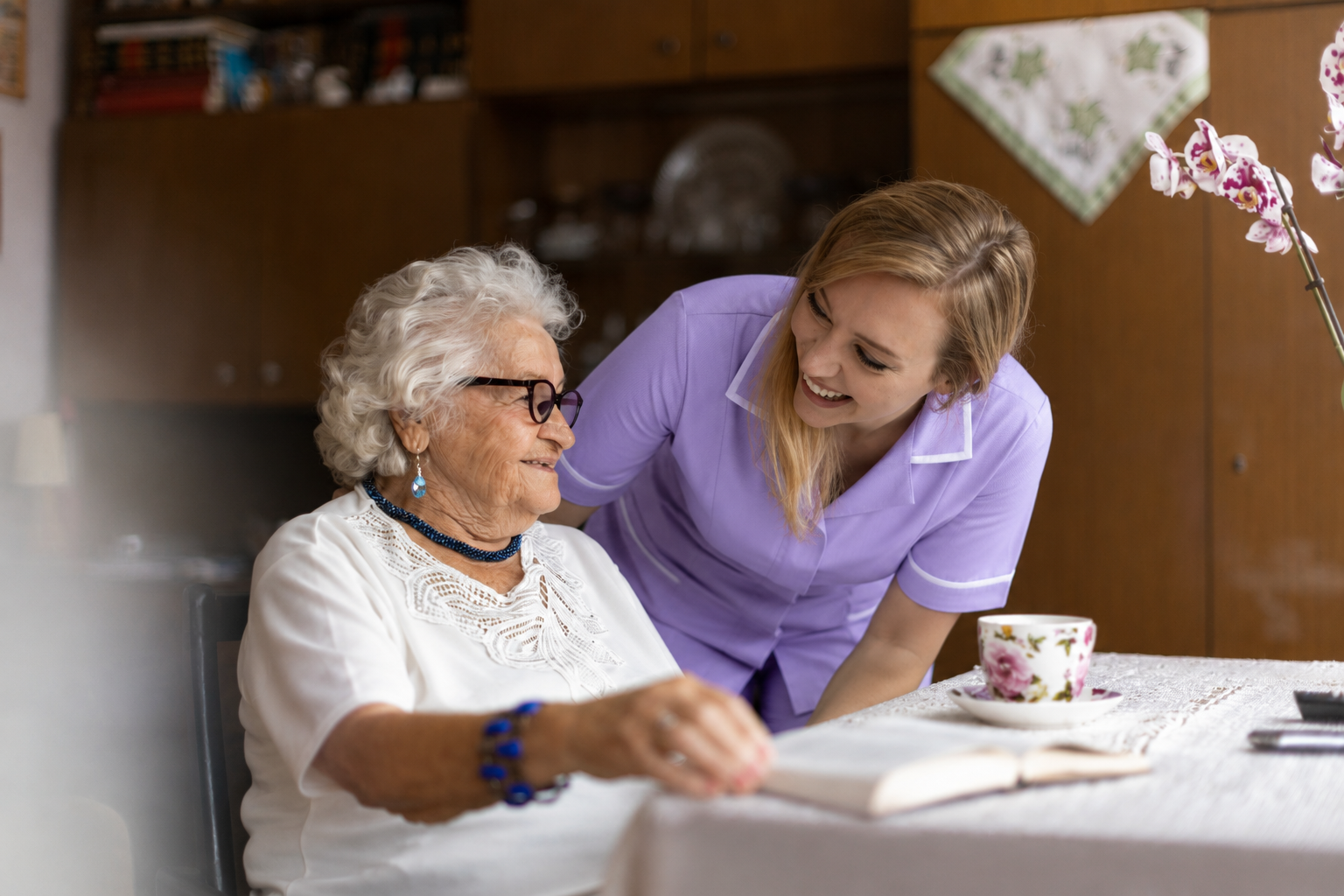
Families often tell us the hardest part is not the tasks but the energy. Being endlessly patient and endlessly inventive, on your own, is more tiring than the practical jobs. Dementia care at home can take some of that on, and a carer who comes regularly builds up their own sense of what works on a difficult afternoon. Hestia Home Care is GP-led and family-run, and we send the same small team each time, because with dementia a familiar face is doing a lot of the work before anyone has said anything.
If you are earlier in this than the activities stage, our guide to the early signs of dementia in a parent covers what to do first, and if you are the one running out of steam, respite care at home is worth reading.
“Families ask me what they should be doing with their mum. Usually the answer is less than they think, and more of what she already liked.”
Emma Trewin, GP and Co-Founder, Hestia Home Care
Your questions about dementia activities answered
What are the best activities for dementia patients at home?
The ones they already liked, made simpler. Familiar music, familiar tasks and familiar places work better than anything designed specifically as a dementia activity, because they carry no risk of getting it wrong.
What are good calming activities for dementia patients?
Music from their youth, repetitive tasks like folding or sorting, hand massage, and reducing noise and stimulation in the room. These work best used before agitation builds rather than after.
Are games good for people with dementia?
Yes, provided nobody can fail at them. Remove scoring, use larger pieces, and choose matching or sorting over anything that relies on recall.
How long should an activity last?
Usually far less than you would expect. Fifteen to thirty minutes is plenty, and stopping while it is still going well is better than pushing on.
What if they refuse to do anything?
Try again later rather than persuading, and try joining something they are already doing instead of introducing something new. Refusal is often about the sense of being managed rather than about the activity.
You don't have to work this out on your own
If you’re worried about a parent and wondering what support at home might look like, get in touch and we’ll talk it through with you.